Filing vs Filling: The Ultimate Guide to Spelling
Have you ever stared at a sentence, blinked twice, and wondered if you were supposed to use a filing or a filling? You are definitely not alone. Even native English speakers trip over these two look-alikes all the time, mostly because adding or dropping that single letter “e” completely flips the meaning.
Getting this right matters, whether you are drafting a professional email, organizing your desk, or writing a dental blog post. Let’s clear up the confusion once and for all so you can use these terms with absolute confidence.
What Does “Filing” Mean?
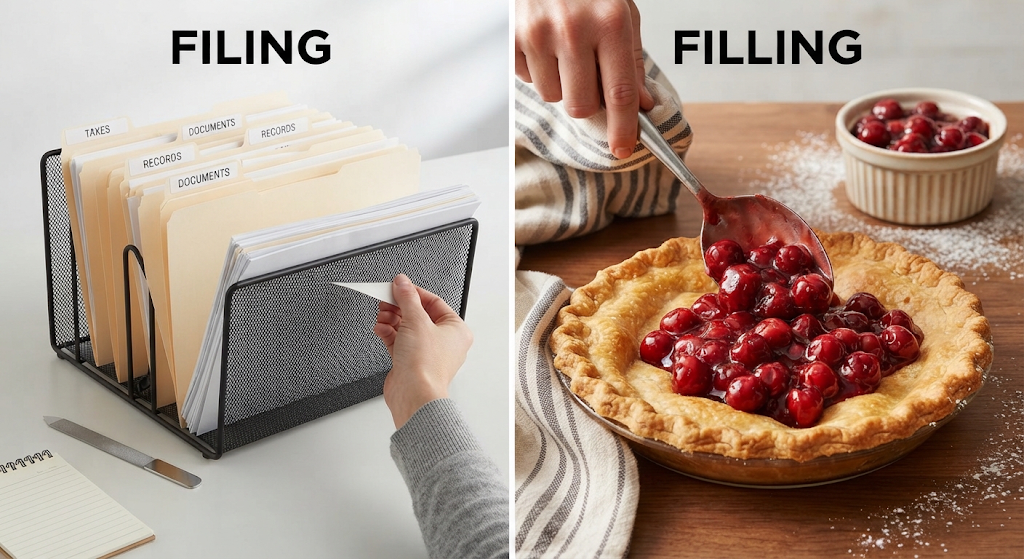
When we talk about filing, we are usually entering the realm of organization, paperwork, or smooth edges. The root verb here is file, which involves sorting documents or using a metal tool to shape materials.
Here are the most common ways you will see filing used in everyday life:
- Document Organization: Storing paperwork in a cabinet or digital folder (e.g., tax filing).
- Legal Processes: Submitting official paperwork to a court or government body (e.g., filing a lawsuit).
- Surface Smoothing: Using a tool like a nail file to shape your fingernails or smooth down rough metal edges.
Quick Tip: If it involves folders, cabinets, courts, or a nail file, stick with the one that drops the “e” and takes a double “l” after the i—wait, no double l! Just filing with one L.
What Does “Filling” Mean?
On the flip side, filling comes from the root verb fill, which means to make something full or to take up space. If an empty space needs a plug, a patch, or a generous scoop of ingredients, this is your word.
Common scenarios where you will need filling include:
- Food and Cooking: The delicious stuff packed inside a pie, cake, or sandwich (e.g., chocolate cream filling).
- Dental Care: The material a dentist uses to plug a cavity in your tooth (e.g., getting a filling).
- General Spaces: Filling a glass with water, filling a car’s gas tank, or filling out a room with furniture.
Key Differences: At a Glance
To keep things crystal clear, let’s break down the core contrasts between a document filing system and a cavity filling side by side.
| Feature | Filing (From File) | Filling (From Fill) |
| Primary Meaning | Organizing, smoothing, or submitting docs | Making full or plugging an empty space |
| Common Contexts | Offices, law, nails, paperwork | Dentistry, baking, everyday supplies |
| Root Word | File | Fill |
Frequently Asked Questions
Is “filing” spelled with two Ls?
No! Filing is spelled with only one “l” (F-I-L-I-N-G). Many people accidentally add an extra “l” because of how it sounds, but the root word is file.
Can “filling” be used as a noun?
Yes. In food and dentistry, filling is very commonly used as a noun (such as a pie filling or a dental filling).
How can I easily remember the difference?
Think of it this way: Filing relates to files (paperwork), while filling relates to filling something up until it is full.
Conclusion
Mastering tricky homophones like filing vs filling doesn’t have to be a headache. Just remember that filing deals with paperwork and smoothing things down, while filling is all about making things full or patching up a cavity.
Now that you’ve cleared up this common spelling hurdle, why not check out our other quick guides on tricky English words to polish your writing even further?